News
Wire Story

Beth Moore Is Leaving Her Ego Behind

Eyeing retirement, the prolific Bible teacher still longs for discipleship in a fractured church.

Beth Moore, photographed at Living Proof Ministries in 2026
Christianity Today April 14, 2026
Annie Mulligan / RNS

For Beth Moore, leaving the Southern Baptist Convention was like falling off a cliff and not knowing if anyone would catch her.

At times, she’d walk the woods near her Texas home and have candid conversations with Jesus.

“I would say to him over and over, I hope you know where we’re going,” Moore said in a recent interview. “I hope you know where we’re going, because I don’t have a clue where we’re going, and I don’t know where I’ll ever belong again.”

It’s been five years since Moore, bestselling author and Bible teacher, left the nation’s largest Protestant denomination, a church that had been her refuge while growing up in a troubled home and that gave her a life she loved. Since then, Moore has found a new church home as an Anglican, rebuilt her ministry, written a memoir, recovered from spinal surgery, and kept doing what she’s always done—helping women learn to dig deep in the Bible.

But last month, Moore announced she’d begin winding down Living Proof Ministries, the nonprofit she’s run for 30 years, and will stop hosting major public events. Next spring, she’ll hold her last major event, in Nashville, Tennessee. She still plans to accept some speaking engagements, but it’s the first step toward retirement for Moore, who will turn 70 next year.

“I could not turn back the hands of time,” said Moore, who said she wants to pass the baton on to younger leaders and to cheer them on.

“I’m getting closer and closer to the day that I’ll see his face,” she said, referring to Jesus. “What are we going to do? Take our big old egos with us?”

On a sunny Tuesday afternoon in Houston in mid-March, Moore sat in the study at Living Proof, its walls lined with Bibles and commentaries and scholarly reference works. By her side were her Christian Standard Bible and a cup of Starbucks.

Moore said she was undone by the decision to walk away from the Southern Baptist Convention. She worried she was betraying the people she loved, even as church leaders and former friends turned against her—mainly because of her outspoken criticism of President Donald Trump and her advocacy for survivors of abuse. 

“It’s such a strange thing to have known people so well, and to look across the table at one another, and I mean this both ways, and truly not be able to understand what the other is thinking,” she said. “Honestly, you can’t wrap your mind around it. I thought we were all on the same side.”

Moore has spent a lot of time thinking about the things that divide her fellow Christians in recent years, how she has seen conservative evangelicals grow suspicious of others when they cite Jesus’ commands to love God and their neighbors.

“What has happened to us?” she said. “We have lost all sense of nuance. Everything is so polarized.”

She said she longs for more focus on discipleship—the idea that being a Christian is not just to be saved but also to be changed and to behave more like Jesus.

“We’ve gotten so brutal and so mean and turned into bullies from every side and certainly every extreme. And that could not be more oppositional to carrying a cross and following Jesus,” she said.

Moore’s search for a new church was difficult. Though women from all kinds churches had attended her events and read her books, Southern Baptists were Moore’s people. The rhythms and songs of the Baptist world helped her make sense of the world.

There are times when her Baptist heart still stirs. Like the Sunday when the congregation at her new church home church sang “Blessed Assurance,” a beloved hymn of her childhood.

It took Moore back to sitting with her grandmother and other family members in the pews at First Baptist Church in Arkadelphia, Arkansas, where she had grown up.

“The things that were dear are mine forever,” she said. “I refuse to give it up.”

Still, she’s not been able to escape the past. About a year and a half after she left the SBC, someone tracked Moore down and found her on a livestream from her new church. She was in a robe and had been the lector that day, reading the Scripture. Frames from the livestream went viral. She feared her past troubles would haunt her new church.

“I thought I found a safe place,” she said.

Moore called church leaders, who she said tried to reassure her that things would be all right. She recalled one woman in the congregation taking her aside and telling her that the church had her back. “You will never, ever have to fight for yourself here,” she recalled the woman saying.

That incident reminded her of what she lost. She had so many friends in the SBC and felt no one had stood up for her.

“Sometimes you leave a place, not because you don’t love them anymore, but because you do,” she said.

Even as she plans to close out Living Proof, Moore says there’s still nothing better than cracking open a good Bible resource and digging in. She believes there’s a difference between teaching the Bible and being a preacher, something she has no desire to do.

“What I love and feel most called to do is open those pages with a group, encourage them to get into it with me,” she said.

She laughed at all the props she employed in the past—like the model brain she used to haul on airplanes with a note for curious TSA agents, or the skeleton she brought out when teaching about Ezekiel 37, a passage about dry bones coming to life.

Julie Salva first heard Moore teach in the 1990s, when Salva was visiting her cousin in Jacksonville, Florida, and found herself in church, listening to “some lady named Beth.” Salva was hooked from the moment she showed up.

“I was like, my goodness—seriously, my goodness—this woman is a teacher,” Salva said.

Salva, who has taught the Bible to adults at Hermitage Hills Baptist Church, said Moore helped her realize she could study the Bible on her own. And she hopes to be in attendance in 2027 when Moore’s ministry hosts its final event in Nashville.

A few years ago, she met Moore at a book signing and was beside herself with joy.

“It’s not a fan girl thing. It has nothing to do with that,” she said. “Her teaching changed my life, and as a result, I’m able to pour into other people.”

Moore’s love for the Bible is contagious, said Megan Lively, who plans to go see Moore in April at the Cove in Asheville, North Carolina, a famed retreat center started by Billy and Ruth Graham that’s a few hours from her home.

“There are two people I know who truly love Jesus and bear fruit,” she said. “That’s my mother-in-law and Beth Moore.”

Lively, who has a master’s degree from a Southern Baptist seminary, said that in the evangelical world, there are lots of opportunities for men to get advanced education in the Bible and theology, but not as many for women. Moore’s studies, she said, help fill that void.

Lively, a whistleblower and advocate for SBC abuse victims, recalled sitting with Moore and other advocates during the 2019 SBC annual meeting, as the denomination’s abuse crisis was becoming public. A year earlier, Lively had come forward, accusing SBC leader Paige Patterson of covering up a sexual assault when she was a student.

The women ended up hanging out with Moore all afternoon and finding laughter amid their frustrations with the SBC.

“In the midst of a crisis, she brings joy,” Lively said.

Kristin Du Mez, a historian at Calvin University, said Moore’s move toward retirement is the end of an era. Moore, like Bible teachers Joyce Meyer and Kay Arthur, was a superstar of women’s ministries for decades—and helped create space for evangelical women to thrive on their own terms.

“It was at women’s ministry events where they really felt seen, where they felt included, where they felt like the messaging really was directed to them personally,” said Du Mez, who writes about Moore in a forthcoming book about the lives of Christian women.

Du Mez said some church leaders have underestimated the power of what happened during women’s Bible studies. There was a lot of laughter and pink Bibles at those events, but also serious study and engagement with biblical scholarship. Moore, she said, was known for her humor, her ability to connect with an audience, and the depth of her teaching.

“That was part of Beth’s brand,” Du Mez said. “She was approachable, she was likable, but I think many women were drawn to the fact that they got something of substance from those Bible studies.”

Du Mez has also watched Moore’s struggles to make sense of the current political moment and her loss of belonging. The evangelical movement, she said, is built not just on belief but also on deep and meaningful friendships. But for some, those friendships have shattered in the Trump era and those ties have proved fragile.

The past few years, Moore said, have taught her about the power of love, even for our enemies. Jesus taught his disciples to love God and to love their neighbors. There are no exceptions to those rules, she said — Christians may disagree or fight with one another, but they are never allowed to hate.

“We cannot get comfortable with our hate,” she said. “It is poison to us. We may feel it. It may overwhelm us at times, but that cannot be a place we stay. We have to fight. We have to fight for the right to love and not let someone drag us into hate.”

When she finally stops teaching, Moore hopes she will be remembered for her devotion to Jesus, not her flaws. “I would hope they would be able to say, well, you know, that girl was a mess,” she said. “But she loved Jesus and she wanted us to love him.”


News

UK Immigration Plans Unsettle Hong Kongers Who Fled China

Christians continue to cling to the fact that “the Lord has not abandoned us.”

A family who arrived in Britain from Hong Kong plays football in Chelmsford on January 26, 2021.

A family who arrived in Britain from Hong Kong plays football in Chelmsford on January 26, 2021.

Christianity Today April 14, 2026
Adrian Dennis / Contributor / Getty

Connie Law and her family moved from their home of Hong Kong to Manchester, England, in 2021 after Beijing imposed a stringent national security law on the former British colony. Many families made similar moves in search of greater freedom for their children as authorities clamped down on Hong Kong’s pro-democracy movement, an action officials said restored order from chaos.

The UK provided a pathway to citizenship for Hong Kongers through the Hong Kong British National (Overseas)—or BN(O)—program, which requires five years of residency plus language and financial sufficiency requirements before allowing them to apply for permanent residency. After one year of permanent residency, they can apply for citizenship. Canada and Australia offered similar immigration pathways.

Yet as Law and many of the 170,000 other Hong Kong immigrants in the UK reach the five-year mark, new proposed requirements for permanent residency applicants—including an increased English proficiency—could make it impossible for some Hong Kongers to stay in their new home.

At the Chinese church in Manchester where Law is the assistant minister, she said many congregants would not be able to reach the proposed conditions of “upper intermediate” English—equivalent to university entrance level—and an annual income of more than £12,570 (about $16,870) for three to five years. Annual earnings over that amount are subject to income tax. Unveiled in November, the proposed regulations were part of the UK’s plan to restrict the influx of migrants.

“Everyone is scared and worried” that the proposal will jeopardize their immigration prospects, Law said.

After complaints from Hong Kong immigrants, the British government confirmed in mid-March that those on the BN(O) route will not face changes to their English requirements, whereas other categories of immigrants will be subject to the stricter language standard starting in March 2027. But it remains unclear how the government will proceed with the proposed income requirement. 

Hong Kong pastors ministering in the UK describe this latest upheaval in the immigration process as disheartening while also seeing the ways God is continually teaching their community to trust in him instead of worldly governments—even those friendly to Hong Kongers’ democratic ideals.

When news broke that the UK government was seeking to raise the bar for immigration, many Hong Kong immigrants became troubled, depressed, and tearful, said Wong Siu-yung, a preacher at various Chinese churches in the UK. Some found it unfair that the UK would alter the terms to the immigration pathway they had agreed to.   

Wong, who is in his early 50s, said the tougher language requirement would be challenging for him; he would need to work hard to improve his conversational English.

This is not Wong’s first immigration setback. He initially moved to Taiwan during Hong Kong authorities’ crackdown on the pro-democracy movement in 2019 and 2020. He worried about arrest as he helped spearhead a Christian declaration that Beijing considered sedition. After discovering Taiwan’s changing immigration requirements effectively barred him and his wife from gaining permanent residency there, they emigrated to the UK in 2022.  

Living in Nottinghamshire, England, Wong currently works at a warehouse in addition to preaching. He also had jobs in pharmaceutical packaging, sandwich production, and as a sushi chef, so meeting the proposed income requirement would not be a problem for him. 

But immigration “isn’t just about one person, we’re a family,” said Wong, referring to his wife, who would not satisfy the income criterion. Because it is hard for Hong Kong immigrants to find jobs in the UK on par with what they did in Hong Kong, they often resort to blue-collar work, Wong explained. But his wife cannot take up physically strenuous employment due to chronic rheumatoid arthritis. 

Critics of the income stipulation say it is an unreasonable demand for certain groups such as caregivers, students, and retirees. Hong Kong Watch, a UK-based rights organization, surveyed 2,000 Hong Kongers under the BN(O) plan and found only 38 percent of the respondents said they could satisfy the income requirement. It also found that only 28 percent of the participants were confident in reaching the proposed upper intermediate English level.

Faced with the prospect that new immigration rules could upend their lives, YouTubers have created videos to inform fellow immigrants about the latest updates on the BN(O) plan. Hong Kong immigrants have also lobbied their members of Parliament to urge the British government to exempt them from possible immigration changes. In Nottinghamshire, Wong and about 500 other Hong Kongers signed a petition in November addressed to their parliamentarian.  

As a follow-up, about 60 of them met with that member of Parliament in mid-January in the town of Worksop to express their concerns over the proposed immigration requirements. One couple said that raising the English standard to upper intermediate would force them to divorce to ensure their children have a future in the UK. The wife’s English falls below the proposed standard enough that she would need to return to Hong Kong, while her English-proficient husband would remain in the UK with their children.

Other immigrants said they would return to Hong Kong if the British government abruptly enacted the proposed requirements, according to Law. While Law has already applied for permanent residency under the previous requirements in March, she noted the difficulty Hong Kongers in the UK face in returning home.

For instance, if her family had to return, her eighth-grade daughter wouldn’t be able to catch up to the Chinese standard at a local Hong Kong school, so Law would need to send her to a more expensive international school. Law and her husband would struggle to afford school tuition, secure a job, and find suitable housing, as they’ve already sold their Hong Kong property.

Still, Law sees immigration-related challenges as opportunities for spiritual growth. Some non-Christian immigrants came to faith in the UK after finding community and support from the church. And within Law’s Christian immigrant community, believers encourage each other to have more faith in God.

“We’ve already been through big trials, going from not finding a job to finding one, not adapting to English to persevering through many difficulties, so our faith has grown a bit and that lets us have faith to keep enduring,” she said.

Hong Konger Anne Ngai and her family also applied for permanent residency in March. Ngai, a youth pastor at a Chinese church in London, noted that some of her church members have decided to return to Hong Kong due to their inability to adjust to living in the new country. Others      struggle with doubts that they can fulfill potentially more stringent immigration requirements. Weighing on many immigrants’ minds is the question of “Should I return [to Hong Kong] or remain not knowing if I can finally stay here?” Ngai said. 

When she lived in the comfortable familiarity of Hong Kong, Ngai felt she had life under control. But since moving to a foreign country and dealing with countless new challenges–like getting a driver’s license, sorting trash, getting her boiler fixed, and navigating the subway system without internet access underground–she sees more clearly how God protects and provides for her. “God is very true and real,” she said.

Back in Nottinghamshire, Wong said that even moving to the UK is not a full escape from Beijing’s influence. In January, the UK government, under the ruling left-wing Labor Party, allowed Beijing to build a “mega-embassy” in London despite opposition from activists who fear the site could facilitate surveillance on dissidents.

As he and his wife face hurdle after hurdle on their immigration journey, Wong has learned that perseverance in faith is crucial. He pointed to 1 Corinthians 10:13—“No temptation has overtaken you except what is common to mankind. And God is faithful; he will not let you be temptedbeyond what you can bear. But when you are tempted, he will also provide a way out so that you can endure it.” In the context of the Israelites’ failure to remain obedient to God, Wong noted the way out that God provides to believers is not necessarily a quick, easy escape, but rather perseverance itself. 

He also clings to the importance of living in the present as expressed in Ecclesiastes 3. Rather than worrying excessively about the future and things outside one’s control, “in the present, you can discover the Lord’s grace, you can see the Lord work,” Wong said. The present is part of eternity, he said, and even food and family are part of God’s eternal graces. 

“When what’s ahead is so uncertain and the world is so chaotic and broken,” Wong said, “we have to hold on to these things so we know we are now in eternity and the Lord has not abandoned us.”

Books
Excerpt

Sorting out Truth and Lies After Divorce

An excerpt from This Was Never the Plan: Walking With God Through the Heartache of Divorce.

The book cover on a green background.
Christianity Today April 14, 2026
Illustration by Christianity Today / Source Images: Getty, The Good Book Company

After my divorce, I questioned everything about myself, so whenever outsiders implied that I was even partly to blame for what happened, it hit a nerve. I still remember reading an article weeks after my ex had left that made me even more insecure, and that may or may not have inspired my purchase of a dartboard.

The author said, “After talking with thousands of married couples, I have seldom found a loving, submissive woman with a husband who is abusive or immoral.” He went on to encourage women to suffer with a quiet and patient spirit under any type of mistreatment. The article used Scripture to defend this position, sending me into a rage and solidifying my fear that most Christians were silently judging me for being divorced.

Please know I am not against submission. But biblical submission doesn’t mean putting up with abuse, and a lack of submission cannot be the underlying cause of a spouse’s abusive or immoral behavior. My ex felt that I modeled biblical submission and encouraged me to give talks on it, which I did. But my submission did not save my marriage.

At the same time, I wasn’t blameless in my marriage. Far from it. I acted self-righteously, believing I was never wrong. I said unkind things with a condescending tone. I was critical when I could have been compassionate. And that’s just for starters.

That’s the tension—discerning what is and isn’t actually ours to own. Some of us tend to blame ourselves for everything, constantly replaying what we could have done differently. Others of us instinctively excuse ourselves, shifting the blame elsewhere. And most of us swing between the two, unsure of what’s truly our responsibility. So how do we know what we are truly accountable for and what we’re unfairly carrying?

I had to learn to separate what was truly my responsibility from what others tried to put on me. Maybe you’ve wrestled with that too. Perhaps you’ve been unfairly blamed for things outside of your control, or maybe there are places where God is gently convicting you. We all need wisdom to see the difference. Divorce made me doubt myself, whispering lies that I was all too willing to believe. Here are some of the lies I told myself and the truths I needed to hear.

Lie: I wasn’t enough, or maybe I was too much.

I thought something was inherently wrong with me. Do you wonder whether your spouse would have kept their promises if you were more attractive, in better shape, smarter, more athletic, funnier, less needy, not so talkative, or more outgoing?

Truth: I am enough as I am.

My worth is not defined by my ex’s actions. We are all defined by God’s love for us. You are made in God’s image and are inherently valuable, deserving of love and respect, and God wants you to know that. Don’t let your spouse’s words or actions devalue you.

Lie: If I’d acted differently, this wouldn’t have happened.

I assumed it was somehow my fault. Perhaps you’re beating yourself up, wondering whether, if you’d been more attentive, supportive, or fun, or had taken on different responsibilities, this wouldn’t have happened.

Truth: You’re not responsible for someone else’s actions.

I wasn’t responsible for the choices my ex made. Everyone is accountable for their own actions, so don’t blame yourself or feel guilty about a situation you couldn’t control.

Lie: I failed to notice the warning signs or to fix the relationship.

I felt responsible for fixing our relationship. Perhaps you’re wondering whether you could have saved your marriage if you had noticed signs of trouble earlier and had initiated something—conversations, changes, counseling, or some other kind of intervention.

Truth: You cannot save a relationship by yourself.

Since marriage involves two people, I couldn’t put the burden solely on myself to figure out what was wrong. Each person needs to be honest about what’s going on with them. You might reflect on when your situation changed in order to learn from that, but don’t take responsibility for what isn’t yours to own.

Just identifying the lies and reading the truth won’t automatically change your perception. But it is a first step. Whenever you realize you are putting yourself down and accepting responsibility for what was never your fault, begin replacing it with the truth. Keep reminding yourself that you are a beloved child of God and ask him to keep putting what’s true in front of you.

I want you to heal from the pain you’ve endured. For me, an integral part of healing was looking at my own heart and seeing areas where I needed to change. We’ve all been wounded, and we’ve all wounded others. None of us are completely innocent.

If you’re like me, those words might make you feel defensive. Perhaps your ex deeply wronged you, but now somehow you’re the one under a microscope, with strangers and friends speculating on what you’re doing wrong. Please know that this chapter is not meant to elicit guilt or condemnation but rather to move you toward wholeness. Our sin entangles us—recognizing what’s holding us back will help us to grow and to heal.

Let’s begin by praying:

Search me, O God, and know my heart;
test me and know my anxious thoughts.
Point out anything in me that offends you
and lead me along the path of everlasting life. (Ps. 139:23–24, NLT)

Then, as you ask God to search your heart, you’ll likely become aware of ways in which you’ve been tempted to turn your back on God and find relief on your own. Satan wants to exploit your pain, pushing you into anger and bitterness or swamping you with guilt. He wants to pull you away from God when you need him most. In the Garden of Gethsemane, Jesus told his disciples to pray that they wouldn’t fall into temptation (Luke 22:40). He knew that in the coming hours, days, and perhaps even years of suffering, each would have unique temptations that they needed to bring to God.

While everyone’s struggles are particular to their temperament and past experiences, we all contend with destructive ways in which we respond to ourselves, to others, and to God. Each destructive path will promise relief from the pain, but none will ever deliver. Only God can.

Vaneetha Rendall Risner is author of This Was Never the Plan: Walking with God Through the Heartache of Divorce. This article is a lightly edited excerpt from the book, published with permission from the Good Book Company.

Books
Review

Put Not Your Trust in Techno-Kings

A new book on Elon Musk examines his wide influence, impressive achievements, and flawed ideology of centralization

Elon Musk wearing a crown.
Christianity Today April 14, 2026
Illustration by @‌richchane

Elon Musk may be the most polarizing figure in our polarized society—or at least Donald Trump’s only credible rival for that crown. 

To show my cards at the outset, I’m not a fan. But reading Muskism: A Guide for the Perplexed, by Quinn Slobodian and Ben Tarnoff, gave me a grudging respect for Musk’s real achievements. While venture capitalist Marc Andreessen proclaimed that “software is eating the world,” Musk pivoted to building rockets, cars, robots, tunnel-boring machines, and brain chips. His impressive record of making stuff—real stuff—sets him apart from most other tech titans. 

Slobodian and Tarnoff are critical of Musk too, but they demonstrate how Muskism defines our economy much as Fordism shaped America’s 20th-century industrialization. Beneath the madness of Musk’s online trolling is a method we’d do well to understand. 

But we should also recognize that, alongside its genuine successes, this method has a heresy at its core. As Christians, we await not a “Techno-king,” Musk’s official title at Tesla, but a Messiah whose kingdom is not of this world.

Muskism opens with its weakest chapter, which considers the motives that led Musk’s maternal grandfather to immigrate to South Africa, implying Elon shares his ancestor’s racism. While the authors acknowledge that Musk has a “conflicted” relationship with his birthplace and was “alienated by the machismo that dominated white South African society,” they still insist, “Apartheid South Africa was the cradle of Muskism.” 

The chapter relies mostly on speculation about his childhood, and—given that Musk secured a Canadian passport and left the country at just 17 to avoid military service—it seems unwarranted to saddle him with the evils of apartheid. 

The next three chapters are better. They chart the early years of Musk’s career and identify key features of his modus operandi. 

First, when the dot-com crash led tech companies to consolidate markets to turn a profit, Musk “moved in the opposite direction.” He invested the millions he made selling his first startup into making rockets and colonizing Mars. You can’t disrupt the aerospace and automobile industries simply by spinning up new software; you have to solve difficult engineering and logistical challenges. Mars hasn’t happened (yet), but Musk’s SpaceX drastically reduced the cost to launch satellites and succeeded in ferrying astronauts where legacy giants like Boeing embarrassingly failed.

Second, while libertarian rhetoric is the norm in Silicon Valley, Musk tends to collaborate with the state and often profits by providing platforms for government infrastructure. Musk himself has noted how state investment creates opportunity for private profit, drawing a parallel between tech companies benefiting from federal defense research that led to the internet and aerospace companies benefiting from NASA’s research. 

SpaceX got its start fulfilling government contracts, and Tesla survived hard times by landing a large government loan. While Tesla paid back that loan early, it continued to benefit from federal incentives lowering the price of electric cars, and SpaceX has thrived on NASA contracts and on selling its Starlink internet service to governments alongside individual customers. 

The US and other governments now pay Musk’s companies for “sovereignty as a service” in the same way they hire private security contractors such as Blackwater or contract with Palantir for information analysis. In 2025, Musk’s xAI signed a $200 million contract to give the US government access to Grok, its AI tool. Muskism doesn’t seek freedom from government; it seeks profit.

Third, Muskism combines principles from software development with vertical integration in a model that Slobodian and Tarnoff call “lean Fordism.” Silicon Valley, the land of “move fast and break things,” gave Musk experience with the power of iterating quickly and learning from failure. As Musk has said of SpaceX’s philosophy, “If we’re not blowing up engines, we’re not trying hard enough.” He has adapted elements of Toyota’s “lean production” methods to give Tesla engineers quick feedback. 

What makes Muskism distinctive is how it combines the “fail-fast experimentalism” of agile development with the vertical integration championed by Henry Ford. Ford’s own implementation didn’t always succeed, and by the 1990s, globalization made just-in-time supply chains the more popular solution to lowering costs. Musk bucked these trends by bringing more production in-house. 

Instead of outsourcing electric batteries for his cars, for instance, he built the “gigafactory” to make components for Teslas. Amid rising tensions between the US and China, the return of tariffs, and the disruptions of COVID-19, Musk’s insistence on controlling the entire production process proved prescient.

The second half of Muskism examines what the authors call Musk’s “cyborg turn”—his growing interest in social media that culminated in his purchase of Twitter (now X); his work on AI and brain-computer interfaces; his concerns about the “woke mind virus”; his crypto boosterism; and his role in Trump’s Department of Government Efficiency (DOGE) program. Yet what the book terms a “turn” obscures the continuity between the various personae that Musk wears. “Carbon Musk” and “Cyborg Musk” share the same DNA.

At its core, Muskism is a response to the disruption and uncertainty of contemporary life. If you want security, you need to control essential infrastructure: cars, factories, rockets, the internet, social media, AI. If the wrong people control them, disaster may ensue, so guarantee that the right people have control. 

But this approach doesn’t fundamentally challenge the underlying dynamics set in motion by highly centralized networks. A more radical response to the existential risks posed by our dependence on far-flung, brittle infrastructure would embrace creaturely limits and seek decentralized, resilient forms of exchange. Muskism instead demands access to the “God mode” of total, centralized power. As the authors note, rather than looking to escape from the matrix, Musk wants to control it.

If you squint, you can almost make out a more decentralized road not taken. Widespread batteries and solar panels could make the electrical grid more resilient, and crypto’s promise has always been its peer-to-peer transactions. But Tesla—or any hacker—retains control of all its cars and can use its cameras and microphones to surveil drivers. And crypto remains prone to corruption or to celebrity influencers—like Musk—who manipulate its value. 

Twitter is a case in point. Musk became frustrated with its role in spreading “the woke mind virus,” but “instead of seceding from the network, he [determined he] would take control of it,” Muskism’s authors write. The company had plenty of problems when Musk purchased it, and while he may have made it more profitable, it’s hard to argue that Muskism has made X a haven for civil conversation (though it has become a valuable source of training data for Grok). The fundamental problem isn’t the algorithm; it’s the scale.

Musk has also taken this approach with AI. He founded OpenAI out of concern about the damage that a rogue or misaligned AI could cause. When he lost control of that organization, he launched Grok instead. Yet training a reliable, “truth-seeking” AI is proving as impossible as running a large-scale social media platform in a way that serves truth and genuine understanding. 

Muskism’s authors chart major Grok missteps, including when it called itself “MechaHitler” after a video-game character. Musk has confessed that “it is surprisingly hard” to guide AI between the Charybdis of (pardon his language) “woke libtard cuck” and the Scylla of “MechaHitler.” It may even be impossible.

Slobodian and Tarnoff observe that one approach to security is to airgap a computer, isolating it from any network by which hackers might access it. Musk consistently opts against that kind of solution. Instead, he personally takes control. 

This mentality guided DOGE’s efforts to centralize government data across many agencies in a quest for efficiency and power. But as the authors point out, “Silos are not necessarily bad things. . . . The barriers between them can be safeguards—checks against overreach, misuse, and surveillance.” Even when it seems to succeed, Muskism leaves systems hypercentralized and therefore vulnerable to unprincipled tyrants and unforeseen disruptions. 

For Musk, this is where Mars comes in: It’s the escape hatch if there’s a critical failure on Earth. If that seems far-fetched, keep in mind that it may, in fact, be easier to fly to Mars than to engineer social harmony and truth-seeking AI. For the rest of us, it’s prudent to know more about the techno-king shaping our society, and Muskism is a perceptive introduction, though the book has plenty of flaws. 

Sometimes the authors indulge in dark insinuations or criticize Musk for things outside his control. They focus on his forays into European politics without acknowledging that, in fact, immigration and declining birth rates pose wicked political problems that more centrist and leftist parties have failed to address. They ignore that Musk isn’t responsible for elite failures and rising populist frustrations across the West.

These missteps are a good reminder that we shouldn’t get distracted by Musk’s flamethrowers and memes. Muskism is and will continue to be an influential ideology, and Christians can recognize its genuine accomplishments while rejecting its fundamental heresy. 

Our hope does not lie in gaining “God mode” access and controlling essential platforms. If we place our hope in the return of the King who rode into Jerusalem on an ass, we’ll be freed to take up the work of loving our neighbor without fretting about what the future holds or the next Herod who thinks he’s on the throne. Some of us might even be freed to reimagine transportation and energy and communication in radically decentralized, convivial, redemptive ways. 

Jeffrey Bilbro is professor of English at Grove City College and editor in chief at the Front Porch Republic. His most recent book is Words for Conviviality: Media Technologies and Practices of Hope.

Ideas

Thou Art the Man

Staff Editor

President Donald Trump’s diatribe against the pope—paired with his posting of a blasphemous AI-generated image—shows contempt for the things of God.

U.S. President Donald Trump walks to Air Force One on April 11, 2026 at Joint Base Andrews, Maryland.

U.S. President Donald Trump walks to Air Force One on April 11, 2026 at Joint Base Andrews, Maryland.

Christianity Today April 13, 2026
Tasos Katopodis / Stringer / Getty

After King David’s crimes against Bathsheba and her husband, the Lord sent the prophet Nathan to speak to him. Nathan began with a parable: a story of two men, one rich and one poor, the former rapacious and cruel and the latter his victim. As David was stirred to righteous anger, Nathan replied, in the famous rendering of the King James Version, “Thou art the man.”

That line came to mind as I read President Donald Trump’s weekend diatribe against Pope Leo XIV, which he soon followed with a post (later deleted) of an AI-generated image of himself as Jesus.

Plenty could be said of the details of Trump’s comments about the pope. But more important, I think, is the posture this pair of posts evinces toward the things of God. Even if Trump is right on every issue he invokes—crime, COVID-19 closures, Iran, Venezuela, and the stock market—he’s still grotesquely wrong to elevate himself to the level of Christ and claim for himself authority over Christ’s church.

The elevation in that image is not debatable. It’s not generic self-aggrandizement. It’s not a classic political cartoon. It’s not, as Trump implausibly claimed, “me as a doctor, making people better.”

Nor is it just one more Trumpian exaggeration, as longtime commentator Geraldo Rivera suggested, and therefore something we shouldn’t take seriously. Nor yet is it something we should take “seriously, but not literally,” as is so often true of Trump. It’s sacrilege, plain and simple. It’s blasphemy.

I don’t say that because I’m “offended,” in Rivera’s term. My feelings aren’t really relevant here. I say it because I have functioning eyes, and I can see what this image is intended to convey.

And in case there were any lingering doubts, the president’s message to the pope clears them right up.

Notice his phrase, over and over: “I don’t want a Pope who …” But where did he get the idea that his opinion would be relevant in the selection of a pope?

As an evangelical Protestant, I do not uphold the papacy. But Catholics are part of the body of Christ—“no one can say, ‘Jesus is Lord,’ except by the Holy Spirit” (1 Cor. 12:3). And the purpose of a pope is not to please a president, nor should the perspective of a president have any bearing on picking a pope.

The pope is, fundamentally, a pastor, one of many shepherds of the flock. As a pastor, he is not immune to critique. But as with every pastor throughout the church, whether ministering in a backwoods chapel or in the Vatican, the person whose opinion matters is God.

In a brief statement responding to Trump’s post on Monday morning, the bishop leading the US Conference of Catholic Bishops observed that “Pope Leo is not [Trump’s] rival.” The president, I think, would agree. His post suggests he sees the pope not as a rival but as a subordinate, one more “world leader” who ought to bend to his own whims as the most powerful man on the planet. He says Leo should “focus on being a Great Pope, not a Politician,” but his evaluation of Leo is entirely political.

Think again of that list of issues above: all politics. “Pope Leo is WEAK on Crime, and terrible for Foreign Policy,” Trump began his post, talking about the pontiff in language straight out of an election attack ad. Even his claim that Leo was chosen to be pope only “because he was an American, and [the Catholic church] thought that would be the best way to deal with President Donald J. Trump” is classic Trumpian politics—he loves nothing more than taking credit for politicians he’s endorsed winning their races. All this makes perfect sense if Trump considers the pope as a politician, and one inferior to himself.

This brings me back to Nathan and David. When the prophet revealed the king’s guilt, David immediately confessed. “I have sinned against the Lord,” he said. And though his sins were forgiven, he did not escape consequences, because what he had done had “shown utter contempt for the Lord” (2 Sam. 12:13–14).

Though I’m generally aligned with the pope’s views of Trump’s war in Iran, I won’t put his recent comments, the statements that drew the president’s outrage, on par with Nathan’s message for David. Scripture unambiguously says Nathan was sent to David by God (v. 1), and I can’t assign the same authority to Leo.

But I will say that the president is dead wrong to position himself as the pope’s superior, whether implicitly with his words or explicitly in that blasphemous and pointedly timed image. And while taking down the Jesus image is a start, it’s not David’s swift and unqualified confession. Trump says he has “nothing to apologize for,” but I can think of at least two things: challenging the lordship of Christ and showing contempt for the things of God.

Bonnie Kristian is deputy editor at Christianity Today.

News

10 Journalistic Reading and Listening Recommendations

Ten prize winners who acknowledge sin but report redemptive twists.

An open magazine.
Christianity Today April 13, 2026
Alif Caesar Rizqi Pratama / Unsplash / Edits by CT

At CT, we recommend books every week but not often specific articles. Today, though, the Zenger House Foundation is announcing its fifth annual awards for ground-level reporting consistent with a biblical ethic. I’d like to draw attention not to the foundation but the nine winning articles and one podcast. 

CT published two of the winners that start off the list below. (Disclosure: I’m involved with Zenger House and serve as one of the five judges but recused myself from voting on CT articles.) I hope you read the articles below and maybe look through the 40 previous prize pieces from 2022 through 2025.

Here are brief descriptions of this year’s winners:

Mindy Belz in Christianity Today profiled surgeon Denis Mukwege, the Nobel Prize–winning founder of a hospital that has treated 70,000 women for injuries resulting from rape, mostly by M23 rebels trying to take over eastern Congo. The war goes on, and Mukwege, led by his faith in God, keeps fighting evil. 

Emmanuel Nwachukwu in CT portrayed life in a refugee camp for Nigerians fleeing terrorists. Life, already tough for Jennifer Abraham, became even harder when assailants murdered her husband last year. She finds ways to feed their four children and says, “I don’t know when, but soon, God help me. Soon.”’ 

Sean Rubin in Plough told how his mother embraced Christ not through Bible reading, a sermon, or a “moment of decision” but via a winding road with a painting at the crucial turn. His story illuminates both God’s providence and a work of art studied for its mysterious illumination. 

Elizabeth Bruenig in The Atlantic described what witnessing numerous executions taught her about evil and mercy. She reports the pain experienced by victims’ families and how some on death row respond to compassion, raising hard questions about how we weigh justice and the possibility of redemption.

Elliott Woods in Texas Monthly showed—in words and pictures—striving and death amid the largest immigration-related disaster in American history. With awareness of border policy failure and sympathy for those desperately trying to improve their lives, Woods probed the intersection of meth-fueled smugglers and pocket prayer cards. 

By offering a story of resilience and survival, John Woodrow Cox in The Washington Post provided a different angle on the flash flood that last July killed 25 campers and two counselors at Camp Mystic in Central Texas. Heroism merges with mystery, and a gripping image ends the story: “They bowed their heads.”

Joshua Rothman’s moving portrait of Dr. Greg Gulbransen in The New Yorker showed how one man turned a terrible tragedy—accidentally running over and killing his 2-year-old son in 2002—into a career dedicated to helping others through his “therapeutic workaholism.” He both saves lives and documents lives through photography.

Nancy Walecki in The Atlantic unspooled the history of her dad, who while running a guitar business counseled a generation of famous musicians. She drips in accounts of discount store competition, drug use, and hospitality, along with stories of personality and pathos among the music elite—and a religious awakening.

Coauthors Farnaz Fassihi and Hamed Aleaziz traced in The New York Times the journey of an Iranian convert to Christianity through Abu Dhabi, South Korea, Mexico City—and finally to California, where she hoped to be free from persecution. In February 2025, though, US federal agents shackled Artemis Ghasemzadeh and sent her to Panama. 

In his weekly Church Politics Podcast, Justin Giboney leads a street-level and nonpartisan examination of Christian involvement in political issues. Fighting polarization by emphasizing discernment and refusing to dehumanize either right or left, Church Politics offers realistic hope to those who might otherwise despair. 

Marvin Olasky is editor in chief of Christianity Today.

Ideas

Fertility Treatment Beyond the Quick Fix

Contributor

Restorative reproductive medicine is a great idea and can honor traditional Christian teachings on marriage, children, and sex. Just don’t oversell it.

A doctor reviewing an ultrasound.
Christianity Today April 13, 2026
Illustration by Christianity Today / Source Image: Getty

Imagine yourself part of a young couple trying and failing to get pregnant. After years of being asked when you’ll have kids and less-than-helpful advice to “just relax, and God will take care of it,” you finally decide to see a doctor about the problem. After taking your history, doing a physical exam, and running a few simple tests, the fertility specialist tells you that in vitro fertilization (IVF) is your best option—and immediately starts talking about payment plans.

For many Christian women, regardless of their opinions about the moral and ethical problems with IVF, this approach to fertility treatment feels slapdash. And their other experiences with reproductive healthcare may be no better: Many women who aren’t trying to get pregnant but deal with chronic gynecological problems have grown skeptical of hormonal birth control, feeling their health care providers push it as a one-size-fits-all solution to any problem between their ribs and their knees. 

This is the context in which some women are turning to an alternative approach called restorative reproductive medicine (RRM) to take charge of their health.

What is RRM? In short, it’s a two-step approach to women’s reproductive health: (1) find an underlying cause for whatever problem a woman may present, and (2) cure that problem with a wider variety of tools than the average obstetrician-gynecologist would be likely to use. RRM practitioners are trained in techniques like the Creighton Model FertilityCare System and the Billings Ovulation Method that were developed to bring scientific rigor to natural family planning while also honoring traditional Christian teachings about artificial birth control and IVF. They’re now trying to do the same for fertility treatments.

RRM is gaining popularity, in no small part because it’s personalized and focused on holistic health at a time when medicine is getting more corporate, more standardized, and less attentive to patients as individuals. As a physician, I constantly argue for and try to teach a patient-centered approach, and I hear from women whose experience with mainstream medicine made them feel like widgets on a conveyor belt. Modern medical systems too often dehumanize both doctors and patients, and IVF and hormonal birth control seem like shortcuts to fixing a lot of problems.

That’s not to suggest RRM is a universal fix. An American College of Obstetricians and Gynecologists (ACOG) statement denouncing the approach makes a few valid points—for instance, the statement notes that RRM often focuses on endometriosis as a potential cause of infertility when it may or may not be responsible for a couple’s infertility. Endometriosis is very difficult to diagnose, and doctors have argued for years about the best way to treat it.

Some RRM providers specialize in long and potentially dangerous surgeries like the one writer Madeleine Kearns described in a piece for The Free Press. These surgeries have yet to be proven effective in the way other treatments have been. RRM practitioners are also not afraid to use well-studied hormonal treatments like progesterone or clomiphene to help women get pregnant.

RRM is a rival not just to mainstream reproductive medicine but to other political factions as well. We need more federal funds directed toward research on women’s health, including fertility. But that idea is at odds with last year’s government crusade to slash research funding

RRM also sharply conflicts with other forces in President Donald Trump’s political coalition that are much more enthusiastic about IVF. For example, major Republican donor Peter Thiel invested large sum of money in fertility clinics, including a focus on international fertility medical tourism. If you’re unfamiliar with that phrase, one customer is a Chinese billionaire who used IVF to have dozens of babies in the US, then shipped them to various properties across the world. Also in the picture: a family with at least 25 babies (born via surrogates) who are now in foster care after alleged abuse and neglect. 

Yet the ACOG statement—and similar critiques—doesn’t address concerns about standards of care that make women want to seek out RRM in the first place. Some say the profit motive drives fertility specialists to keep using IVF, but the likelier explanation is more mundane: It’s difficult to determine the underlying causes of infertility (and other gynecological problems). Often, no one can find a cause. Doctors jump to IVF and hormonal birth control because other patients would rather have a quick fix than an exhaustive search—and some have even sued their doctors when the process of treatment took longer than they wanted. I can’t say for sure that these patients outnumber those who would prefer RRM, but the general culture of medicine pushes practitioners to embrace quick fixes.

RRM is great because it reclaims the best of what medicine ought to be—a focus on patients as whole people that uses technology appropriately—but we should not oversell its potential benefits. One article about RRM used the headline “We Can Restore Fertility Without IVF,” and that’s only sometimes true. Some women won’t need IVF because RRM treatments have helped them get pregnant, but others will still need to decide whether to use it. For many women, hormonal birth control is still the simplest and most effective answer to their gynecological ailments.

Some Christians will conclude that the end of their journeys through infertility will be a witness to the age to come. With cultural conversations about fertility turning toward eugenics, and with crashing birthrates shaping the world over the next few decades, we need solid Christian public witness on sex and fertility more than ever before. 

Restorative reproductive medicine could become a key facet of that witness by offering a robust approach to helping couples conceive, but we shouldn’t overstate its potential benefits or demonize mainstream practitioners. We also can’t be naive about the fact that it faces an uphill battle even within the Republican Party. Ultimately, we should recognize that shortcuts of any kind will take over medical care unless we give practitioners sufficient time and money to care for their patients well.

Matthew Loftus lives with his family in Kenya, where he teaches and practices family medicine at a mission hospital. His book Resisting Therapy Culture: The Dangers of Pop Psychology and How the Church Can Respond is forthcoming from InterVarsity Press.

Ideas

Threatening Profound Evil Trivializes That Evil

President Donald Trump and Pete Hegseth speak often of Christianity—but they seem to have no interest in its vision for just warfare.

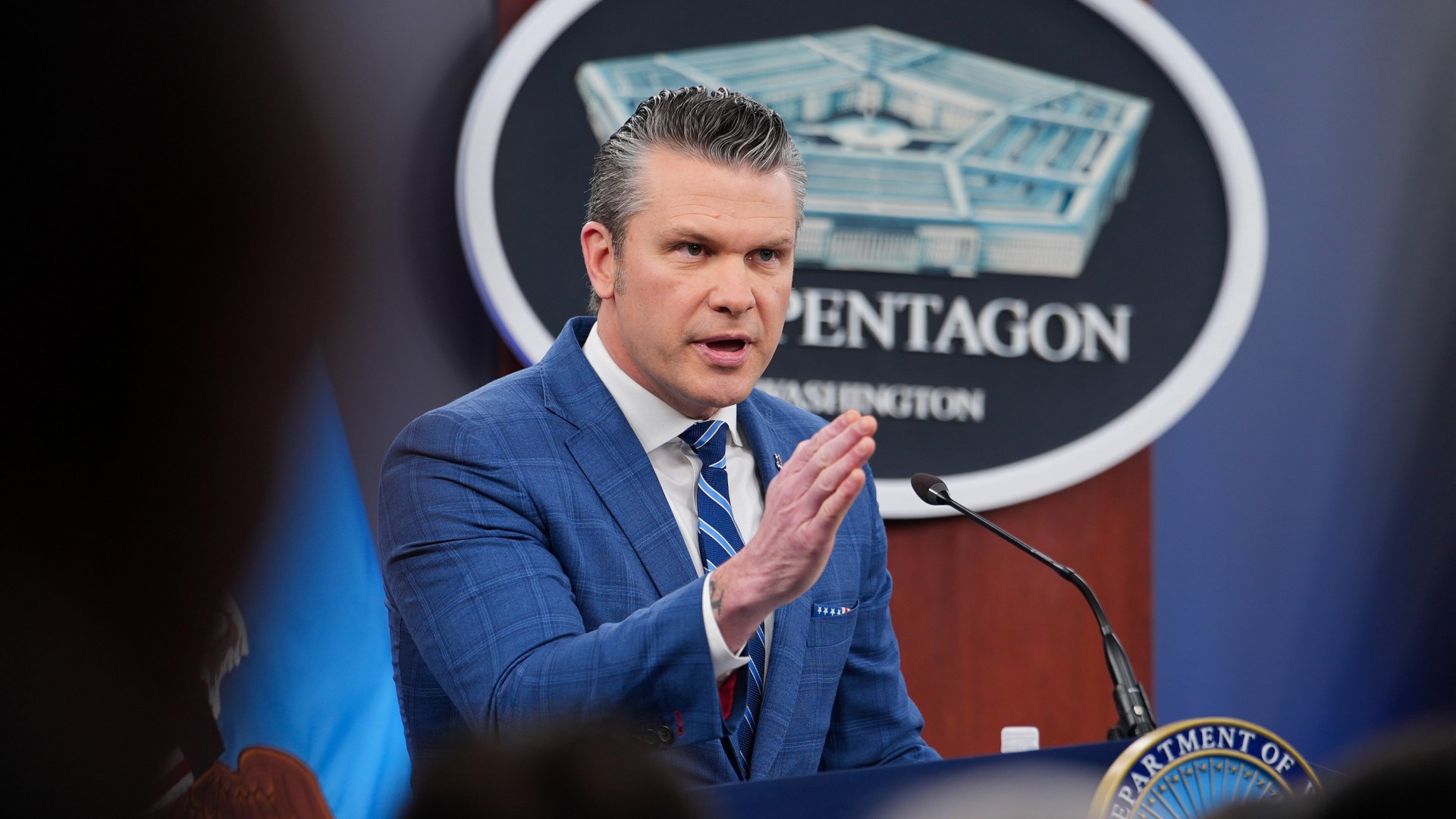
U.S. Secretary of War Pete Hegseth speaks during a press briefing at the Pentagon on April 08, 2026.

U.S. Secretary of War Pete Hegseth speaks during a press briefing at the Pentagon on April 08, 2026.

Christianity Today April 10, 2026
Andrew Harnik / Staff / Getty

The US war in Iran is on pause, at least of this writing. An unstable cease-fire could end next week with a resumption of hostilities—or, potentially, with the conclusion of this war. The one silver lining of a conflict initiated without a clear or consistent rationale is that it can wind down the same way.

But even if peace comes that soon, American Christians can’t pretend we haven’t seen what our leaders have done this spring. Ours is no longer a government interested in haggling over the finer points of just war theory, a Scripture-shaped standard of ethical conduct in warfare, to defend a military intervention. It is instead flirting with dispensing with that standard altogether, using the language and symbols of our faith while ignoring its substance.

For nearly all of American history, our presidents and their staff spoke of military decisions in language and reasoning deeply shaped by just war theory. An idea developed by Christian thinkers for centuries, the theory requires those who make war to assess its justice both before and during fighting. For a war to be just, theorists like Thomas Aquinas have argued, it must be waged by the right authorities for the right reasons and in the right way, particularly where innocent civilians are concerned.

Christian critics of the theory argue that its terms are too flexible and imprecise. For example, CT’s Bonnie Kristian has written that just war theory “can all too easily function less as a limit than as a malleable justification for whatever we’ve already decided to do.” And while the abuse of moral concepts does not invalidate their proper use, Kristian is correct to say that politicians have often employed the categories of just war theory in service of manifestly unjust wars. 

That very malleability makes all the more shocking those moments when leaders don’t bother with just war theory at all—when they make no attempt at an ethical argument and instead explain their plans in nakedly immoral terms.

President Donald Trump took this path the day after Easter, when he announced on social media that “a whole civilization will die tonight, never to be brought back again.” This threat of death not only of enemy combatants but of an entire country is unmistakably a threat of genocide and a violation of the agreement against genocide the United States signed in 1948. 

You don’t need an exhaustive knowledge of just war theory to know that genocide is well outside its bounds. This threat merits the most strident and serious moral condemnation, for the very act of threatening such profound evil trivializes that evil. And Iranian civilians had good reason to worry that this was not mere bluster, because that threat came as the culmination of a long train of disregard for both the principles of just war theory and US law.

After Trump himself, Secretary of Defense Pete Hegseth is the most prominent figure here. He speaks often of Christianity and has led prayer services at the Pentagon. In one of those meetings, Hegseth prayed for violence “against those who deserve no mercy.” At a press briefing in mid-March, he promised “no quarter, no mercy for our enemies.” And this past fall, Hegseth said that under his command, the armed services would be marked by “no more politically correct and overbearing rules of engagement, just common sense, maximum lethality and authority for warfighters.”

Though it’s certainly strange to invoke a “merciful and forgiving” God (Dan. 9:9) in support of one’s intention to deny mercy to others, there’s no legal definition of “no mercy.” The threat of “no quarter,” however, is a legal phrase. Under conditions of no quarter, defeated enemy combatants aren’t taken prisoner or offered the chance to surrender. They are simply killed. 

Because soldiers who have surrendered are no longer combatants, their deaths are not the same as battlefield deaths. Killing them is murder—according not only to just war theory and the Hague Convention of 1907, which the US signed and ratified, but also to the Department of Defense’s own Law of War Manual. “It is forbidden to declare that no quarter will be given,” the manual says. “Moreover, it is also prohibited to conduct hostilities on the basis that there shall be no survivors, or to threaten the adversary with the denial of quarter.”

For US troops to follow through on Hegseth’s threat of no quarter would violate the Pentagon’s own rules. And, as scholar Oona Hathaway of Yale Law School recently noted, the declaration itself is wrong: It may make an enemy more likely to fight to the death and therefore make the battle more brutal than it needs to be.

Unfortunately, these comments are neither untypical nor unprecedented for Hegseth and the administration he represents. Hegseth came to Trump’s attention by lobbying for pardons and clemency for several US servicemembers for actions including killing former enemy combatants after they no longer posed a threat. 

And last year, Hegseth dismantled the Pentagon’s Civilian Harm Mitigation and Response program, which was designed to prevent civilian casualties during American military interventions, acting over the objections of military officials including the chair of the Joint Chiefs of Staff. Since then, the preliminary findings of a Pentagon investigation reportedly say the US is likely responsible for the February strike on an Iranian girls school that killed at least 175 people, most of them elementary-aged schoolgirls.

Trump and Hegseth seem to want to wage war unencumbered by the task of protecting the dignity of human life. But that task is not about “politically correct and overbearing rules” or any other boogeymen of Hegseth’s imagination. Its source is the very Christian faith Hegseth has so often praised within the Pentagon. Just war theory is a distinctly Christian moral innovation that we must not discard. 

Justin R. Hawkins is an ethicist and postdoctoral researcher at the Columbia University Irving Medical Center.

Books
Review

Are Christians Rude Dinner Guests?

Three books on politics and public life about the common good, ISIS brides, and Ronald Reagan.

Three books on a blue background.
Christianity Today April 10, 2026
Illustration by Christianity Today

This piece was adapted from CT’s books newsletter. Subscribe here.

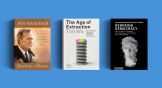
Amar D. Peterman, Becoming Neighbors (Eerdmans, 2026)

The driving idea of Amar D. Peterman’s book is that, for too long, Christians have been rude dinner guests, and that needs to change.

Using the metaphor of a shared table where folks come potluck-style with their various offerings, Peterman argues that Christians often miss out. Either they’re boycotting the table out of fear they will be compromising their beliefs, insisting on hosting every time, or monopolizing the conversation rather than listening. Worse, some bring poison to the potluck!

Becoming Neighbors: The Common Good Made Local invites Christians to say yes to joining our proverbial neighbors at a shared table where “you never know what’s going to arrive” but everyone’s contributions are welcome. The goal, after all, is that everyone is filled, or gets to a state of flourishing. Toward this end, Christians have many worthwhile dishes to offer.

Though Christians hold that true flourishing is impossible without Christ,  Peterman’s concern is that we should be able to treat our neighbors with lovingkindness, even when others do not embrace our faith. Peterman ties his thesis to the many significant moments in Jesus’ ministry that took place around a table and to the challenge Christ offers in the parable of the Good Samaritan. The idea of reframing a relationship with the public square into neighborly love is expressed beautifully at many points.

At times, Peterman overly relies on hypotheticals and generalizations. The journalist in me longed for the crispness of specifics (Which politicians are abusing our faith’s precepts, which pastors are pounding pulpits, which churches are making LGBTQ people feel unwelcome?). Leaving out such examples is only likely to either confirm people’s prior assumptions or alienate skeptics.

The book also contains questionable theological descriptions. For example, Peterson uses nonmale pronouns for God. In one instance, the Holy Spirit is referred to as “she.” Another example—grammatically bewildering more than anything else—is when Peterman substitutes “Godself” rather than he/him pronouns (“Why does God humble Godself to the form of creation?”). This is an inconsistent tic, though, since Peterman also uses male pronouns to describe God. On balance, these weaknesses make me hesitant to recommend it unreservedly.

Azadeh Moaveni, Guest House for Young Widows: Among the Women of ISIS (Random House, 2019)

With the Middle East once again in the headlines, I’ve found myself thinking of journalist and academic Azadeh Moaveni’s book Guest House for Young Widows: Among the Women of ISIS, which was a pick several years ago for my book club that prompted one of its liveliest discussions.

The book attempts to unpack what would compel women to emigrate from all over the world to join the Islamic State, following the lives of 13 Muslim women who were recruited or compelled to join Abu Bakr al-Baghdadi’s caliphate. Moaveni doesn’t justify terrorists or excuse those who were culpable in the caliphate’s atrocities, but she aims to challenge stereotypical media narratives of bloodthirsty ISIS brides.

One of the most valuable contributions of Moaveni’s portrayal is how she takes the role of religion seriously, particularly the appeal to religion in propaganda campaigns that led some young women astray. One example is teenager Nour, from Tunisia. After she became more interested in religion and decided to wear a headscarf, her high school suspended her, and she headed down the road to radicalization.

The latter part of the book explores the dystopian life under ISIS, from whippings for running afoul of dress codes to how quickly wives found themselves widowed due to the high casualty rate of their fighter-husbands.

One of the book’s tenets is that Western culture and Islamophobia helped lead to ISIS recruitments. While there’s no doubt that the cultural and societal alienation some of these women experienced contributed to their joining ISIS, I found Moaveni’s description of other explanations in the lives of these women more helpful in understanding the phenomenon.

Bob Spitz, Reagan: An American Journey (Penguin Press, 2018)

Bob Spitz’s portrayal of Ronald Reagan does what a good biography should, especially for those of us who are particularly nosy—that is, it traces the whole package of the profiled, from familial background (an alcoholic father and devout mother) and religious influences (Catholic and Disciples of Christ) to romance and marriage (in Reagan’s case, marriages) and underlying personal motivations (overweening ambition).

The boy known as “Dutch” always had a taste and flair for stardom: He acted in school plays, played football, and became a local hero by rescuing over 70 people while lifeguarding a swimming hole close to his hometown of Dixon, Illinois.

He’d grow into a Hollywood star, but his acting chops weren’t up to snuff post–World War II, when Hollywood films called for more nuance and grit. However, he found other roles through which to play a part, such as his involvement in the Screen Actors Guild. A pivot to television, and then to being a spokesman for CBS’s General Electric Theater, gave his speechifying talents greater berth and gave him a taste for politics.

The book spends over half of its nearly 800 pages on Reagan’s pre-presidency life, and that is where Spitz’s work absolutely shines. His coverage of Reagan’s political career, however, from his treatment of Reagan’s time as governor to his time in the Oval Office, falls comparatively flat. Important contemporary political figures like Margaret Thatcher or Soviet leaders receive scant mention, and some signature policies were underwhelmingly covered.

Those looking for a good, if not exhaustive, overview of Reagan’s years in office will find that Spitz covers both the successes and failures of the 40th president. And as I do not expect biographers, particularly of politicians, to be hagiographers, I judged that Spitz struck that balance well.

Harvest Prude is national political correspondent at Christianity Today.

News

The Mississippi Farmer Who Helped Resettle 150 Ukrainian Families

As the US makes it more difficult for refugees to stay, Rodney Mast and his church community are rallying around their new friends.

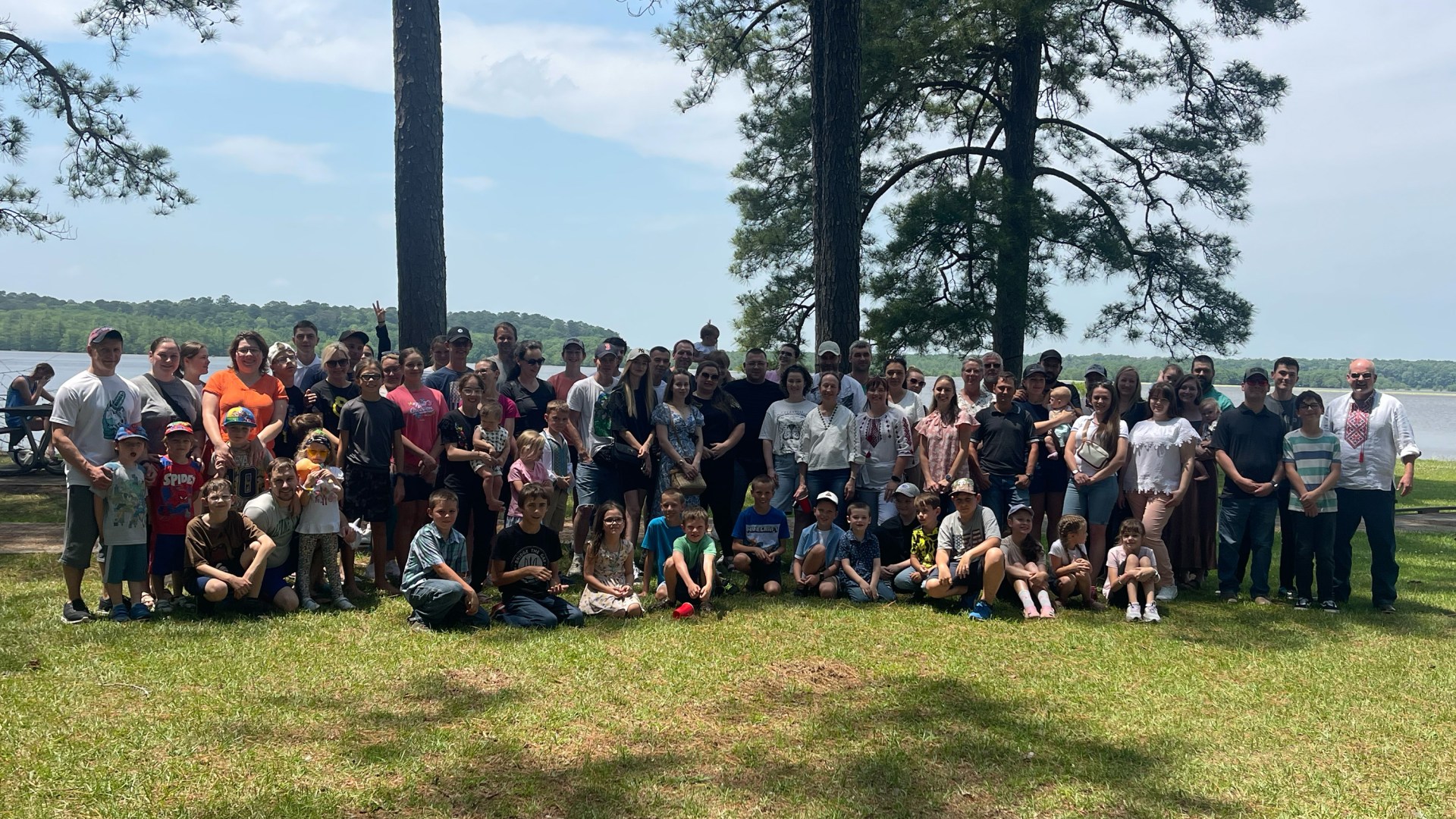
A monthly social gathering of Ukrainian families and volunteers in May 2024 at Noxubee Wildlife Refuge near Starkville, Mississippi.

A monthly social gathering of Ukrainian families and volunteers in May 2024 at Noxubee Wildlife Refuge near Starkville, Mississippi.

Christianity Today April 10, 2026
Image courtesy of Rodney Mast

Late March is corn-planting time, and from 4:30 a.m. to 10 p.m. every day, Mississippi farmer Rodney Mast hums along in his John Deere tractor, hundreds of unsown acres spread before him and a can of Planters peanuts by his side.

“This is the time of year that farm boys live for,” said Mast, who lives in Crawford, Mississippi.

But there’s more to Mast than meets the eye. On top of his tractor, two small flags ripple in the wind: one American and one Ukrainian.

Mast has helped more than 150 Ukrainian refugee families resettle in the US—24 of them in the rural Golden Triangle area of northeast Mississippi. 

“If five years ago, ten years ago, someone would’ve told me that I would have created a little Ukrainian community here in Mississippi, I would’ve practically laughed,” Mast said.

Mast is a third-generation farmer, but his family has left behind a legacy of more than crop raising. 

Mast’s grandparents moved from Indiana to Mississippi in the 1960s to help with racial reconciliation in a deeply divided post–Jim Crow South. Mast said his grandmother cared for sick neighbors and taught literacy classes for Black women. His grandfather provided jobs for their husbands on his farm, always treating them like equals. Mast said this example instilled in him a passion for cross-cultural ministry. 

His farming background also uniquely prepared him to “do the task in front of him,” which is how his efforts with refugees began, he said.

“We have to do whatever the crop is demanding, whatever the weather gives us,” Mast said. “We have to adjust and roll with the punches.”

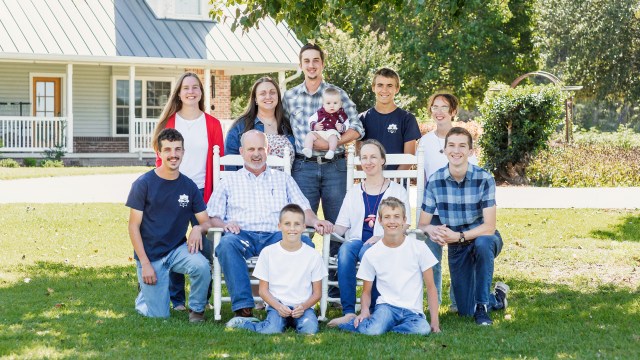
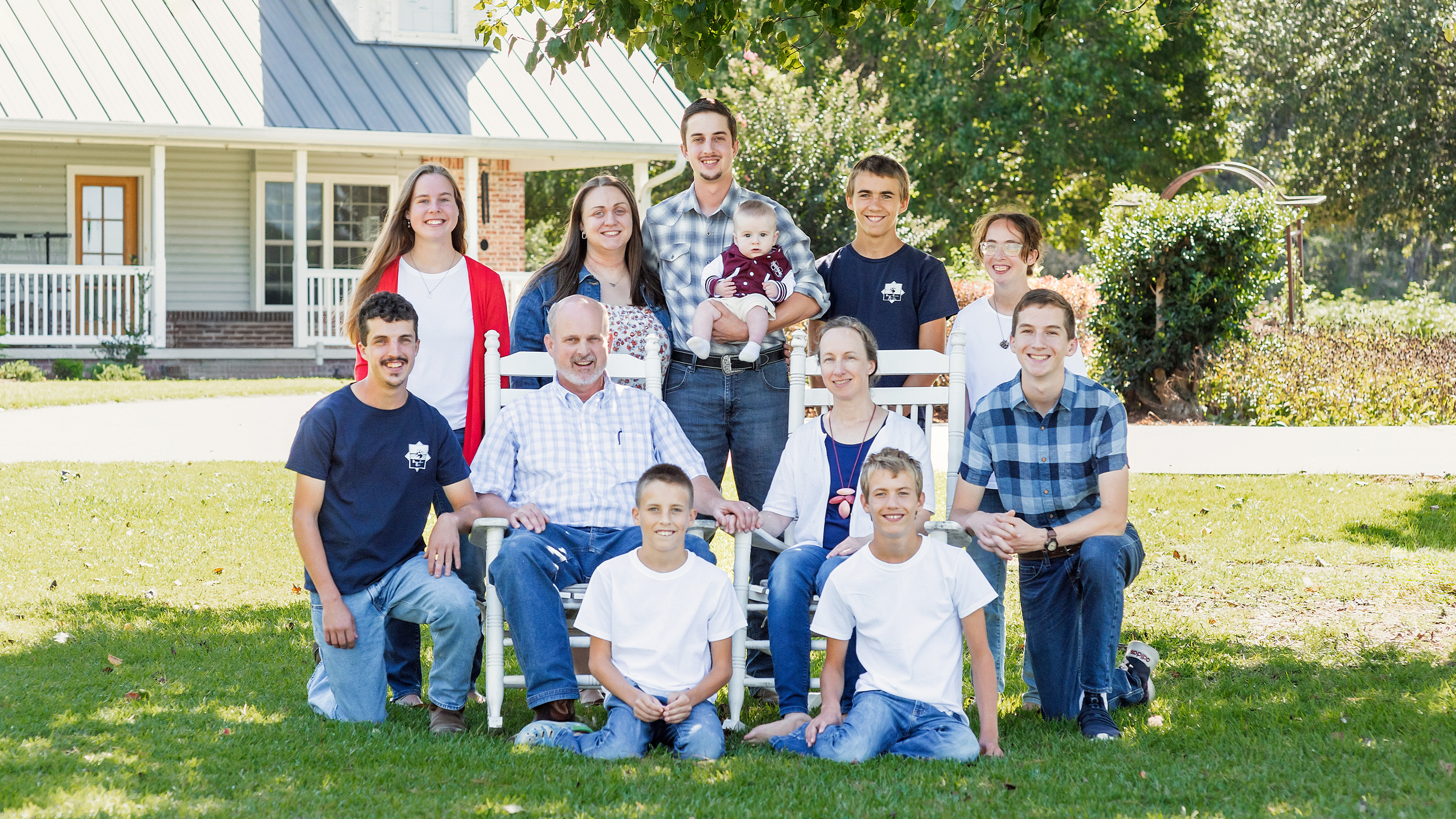
Rodney Mast with his family, including his daughter-in-law, grandson, and adopted Ukrainian sons, taken by one of the Ukrainian refugees.
Rodney Mast with his family, including his daughter-in-law and grandson. Photo taken by one of the Ukrainian refugees.

In December 2018, Mast and his wife, Christine, hosted a child from Ukraine for six weeks through International Host Connection, a nonprofit that connects orphans with US families. This led to their 2019 adoption of three boys from Ukraine. The organization asked Mast to serve on its board, and when war broke out in February 2022, he traveled to Poland to oversee the evacuation and resettlement of orphans. He returned to Poland in June of the same year and, after making sure the orphans were situated, shifted his efforts to help Ukrainian families.

On April 21, 2022, the Biden administration created the Uniting for Ukraine program, which allowed an individual in the US to sponsor a displaced Ukrainian family for a period of two years. Mast researched videos about the program, thought it looked “pretty easy,” and proceeded with the paperwork. 

While searching social media groups for potential Ukrainian families to match with, he had two criteria: eagerness to work and respectfulness. 

The first family the Masts sponsored had five sons. Mast and his wife, parents of eight children themselves, immediately connected with them. “Our hearts went out to them,” Mast said. The family arrived that August. 

Since then, Mast said he has become a “middleman and mentor” to hundreds of sponsors in the US, connecting them with Ukrainian families and providing resources and guidance as they navigate the process.

But sponsorship is only the beginning. It takes a village to care for these families, and Mast said the response from his community has been “overwhelming.”

Churches and individuals across northeast Mississippi rallied to support the newcomers. Ahead of their arrival, Mississippians donated clothes and household items and decorated apartments. Once the Ukrainians arrived, these Americans showed them how to enroll their children in schools, accompanied them to the doctor, and helped them open bank accounts and obtain phone plans.

Mast’s church, Redeemer Church in Starkville, Mississippi, has an average weekly attendance of 12–15 Ukrainians and hired a Russian translator for its sermons. Way of the Cross church in nearby Brooksville puts Russian text on the screen, and Emmanuel Baptist Church in Starkville has a Russian Bible study. 

“It’s sweet and good when people outside of their familiar culture are mingled together under the banner of Christ,” said Kevin Shoemaker, head pastor of Redeemer Church.

Halyna Yefimenko, a young mother from southern Ukraine, arrived on September 9, 2023, at the tiny Golden Triangle Regional Airport with her husband and two sons. She was eight months pregnant. Waiting to greet her was the Mast family as well as her family’s sponsors, who drove them to their new home—fully furnished with donated furniture, beds made, pictures on the wall, and even groceries in the fridge.

Their sponsors organized a housewarming party for them, which families from the sponsors’ church, Way of the Cross, attended, bringing gifts and welcoming them to Mississippi. Church members also threw her a baby shower and were present at the birth of her child. Yefimenko was blown away.

“We have probably never received so much help in our lives,” Yefimenko said. She added that the example of their love strengthened her faith. “I believed in God before in Ukraine too. But when I moved here and met these people and I saw how they believe in God, my faith [has] become more strong.”

Kseniia Yermakova, who goes by Ksu, is an Orthodox Christian from Sloviansk, a small city in Eastern Ukraine eight miles from the frontline. Mast’s generosity and care deeply impacted her as well.

On the day the war began, February 24, 2022, Yermakova, who was living in Kyiv at the time, received an early-morning phone call from her best friend. “What do you hear?” the friend asked. As they were speaking, Yermakova saw and heard a missile slice through the sky. In that moment, she said, she understood the war had begun.

She and her now-husband fled on foot to her in-laws’ home in a suburb of Kyiv, not knowing it was occupied by Russians. The couple decided they couldn’t hide in the basement and wait for a missile to bury them with debris, so they fled to central Ukraine, Yermakova recalled. Her best friend left for the US, where Mast helped her resettle in Mississippi. She begged Yermakova to come too.

“We believed in Ukrainian victory so much that we thought that we are safe in our own country,” Yermakova said. 

But in 2024, Yermakova and her husband began talking about growing their family and didn’t want to have a baby in a city with perpetual shelling. They decided to move to the US, and her best friend sponsored them. Through Uniting for Ukraine, even parolees could sponsor other families if they had sufficient financial means.

Yermakova’s parents and grandmother still live in Sloviansk despite her constant pleading for them to move to a safer part of Ukraine. Just two weeks ago, a Russian bomb destroyed her grandmother’s home. Her grandmother survived only because she had gone outside for a few minutes. 

“I’m calling my mom every day to find out if they are still alive,” Yermakova said. 

Yermakova said she carries a lot of sadness with her, especially for her family still in Ukraine, but continues to be impressed with the kindness of Mast and others in her small Mississippi town. Mast lent Yermakova and her family money for their resettlement process, helped them find their apartment, and provided furniture and household items.

“People here are [warm hearted], and they are generous, and they are ready to help,” Yermakova said.

Yet even after arriving in the US, the hardships have continued for Yermakova and thousands of other Ukrainian refugees. In the first month of his second presidential term, President Donald Trump halted the Uniting for Ukraine program. While Ukrainian refugees in the US are eligible to apply for re-parole, the US Citizenship and Immigration Services’ (USCIS’s) slow processing times have forced Ukrainians out of legal status—and out of the country. Many have no home to which they can return. USCIS also increased fees for approved re-parole applications to $1,000 per person, which poses a great financial challenge for refugees, especially large families.

Mast has witnessed firsthand the toll this has taken on the Ukrainian community.

“They weren’t wanted there; they aren’t wanted here. They don’t know where to go,” he said.

Refugees are allowed to apply for re-parole six months before their current parole expires. Because of the long wait times, Yermakova applied even earlier, although USCIS noted that filing earlier would not result in a faster decision and could result in denial. Her family’s parole expires April 19, and with it her husband’s work permit and driver’s license.

They’ve heard nothing so far except that their case is still being processed. The family is exploring other immigration routes, including work visas and asylum. If those pathways aren’t possible and their parole isn’t renewed in time, they have no idea what they’ll do next. 

Mississippians continue to rally around these families, joining calls with lawyers, lending money for fees, extending prayers, writing letters to USCIS pleading their Ukrainian friends’ immigration cases, and organizing social events, like an annual crawfish boil, to build community. Mast travels regularly to Washington, DC, to advocate for Ukrainian interests, including the Ukrainian Adjustment Act, which would provide a pathway to permanent residency for parolees in the US.

Vika and Bryan Jones from Emmanuel Baptist Church help Mast coordinate social events for the Ukrainian community. Vika, a Kazakhstan native, speaks Russian, the first language of many Eastern Ukrainians. She often acts as a translator for the refugees, including Yefimenko when she was at the hospital giving birth. The Joneses urge Americans not to forget the plight of Ukrainians.

“The war is still going on there, but it’s not new anymore,” Vika Jones said. “So I feel like people think ‘Oh, [Ukrainian refugees are] fine’ and everything, but they’re still struggling.”

Supporting Ukrainian refugees is part of the biblical mandate to love your neighbor, Mast said.

“God has very unique plans in our lives,” Mast said. “One thing I would express to other people that wonder, ‘How do we get involved in something like that?’ I don’t know. Just do the task that’s in front of you. Help the person that is nearby, and see what happens.”

addApple PodcastsDown ArrowDown ArrowDown Arrowarrow_left_altLeft ArrowLeft ArrowRight ArrowRight ArrowRight Arrowarrow_up_altUp ArrowUp ArrowAvailable at Amazoncaret-downCloseCloseellipseEmailEmailExpandExpandExternalExternalFacebookfacebook-squarefolderGiftGiftGooglegoogleGoogle KeephamburgerInstagraminstagram-squareLinkLinklinkedin-squareListenListenListenChristianity TodayCT Creative Studio Logologo_orgMegaphoneMenuMenupausePinterestPlayPlayPocketPodcastprintremoveRSSRSSSaveSavesaveSearchSearchsearchSpotifyStitcherTelegramTable of ContentsTable of Contentstwitter-squareWhatsAppXYouTubeYouTube